
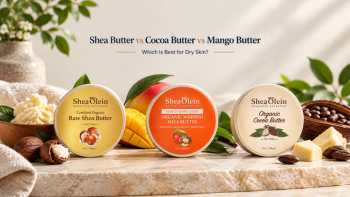
Short answer: Shea butter is the best all-round choice for dry, flaky, sensitive skin. Cocoa butter is the strongest sealer for very dry patches and stretch-marked skin. Mango butter is the lightest of the three and the best pick if you hate a greasy finish or break out easily.
All three sit side by side in our natural carrier oils and butters range, and they look nearly identical in the tub - but they feel different, melt at different temperatures, and behave differently on different parts of the body. That's what actually decides which one belongs in your routine.
What Dry Skin Actually Needs From Body Butter?
Dry skin isn't short of oil alone. It's short of a working barrier, so water escapes faster than your skin can replace it. That's why a thin, watery lotion feels nice for an hour and then leaves you tight again by lunchtime. Butters are occlusive - they form a soft layer on the surface that holds moisture in long enough for your skin to repair itself underneath.
What separates a good butter from a mediocre one comes down to four things:
-
Unrefined over refined - raw butter keeps its natural vitamins and fatty acids, while heavily refined butter has been bleached and deodorised until most of that is gone
-
Fatty acid profile - oleic acid softens and sinks in, stearic acid seals and sits on top
-
Melt point - decides whether the butter spreads easily or drags across your skin
-
Pore-clogging risk - matters a great deal on the face, barely at all on elbows and heels
Keep those four in mind and the choice between shea, cocoa and mango stops being guesswork.
Shea Butter for Dry Skin: Benefits, Drawbacks and Best Uses
Shea comes from the nut of the African shea tree. It's soft enough to scoop with a finger and melts the moment it touches warm skin, which is why it's the butter most people reach for first.
What makes it work is the balance:
-
High in both oleic and stearic acid, so it softens and seals at the same time
-
Unusually rich in unsaponifiables - the plant compounds that calm rough, irritated skin
-
Low pore-clogging risk, which makes it safe for most faces
-
No melting required before use, unlike the other two
The downside is the smell. Raw shea has a nutty, slightly smoky scent that some people love and others can't stand, and it can feel heavy if you apply too much in one go. A pea-sized amount goes further than you'd think.
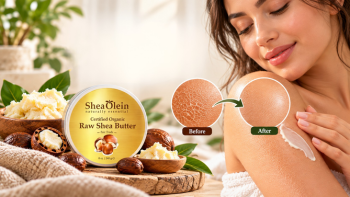
Shea is the right call for flaky legs, winter hands, eczema-prone patches, cracked heels, lip balm and baby-safe blends. Our unrefined raw shea butter is sourced from Ghana and comes in a 1 lb block - enough for months of daily use, or a full batch of homemade whipped butter.
Cocoa Butter for Dry Skin: Benefits, Drawbacks and Best Uses
Cocoa butter is pressed from roasted cacao beans. It's hard at room temperature and needs body heat or gentle warming before it will spread at all, which tells you everything about how it behaves on skin.
Because it's the firmest of the three, it forms the most protective layer. Nothing seals a cracked shin or a weather-beaten knuckle quite like it. It's naturally high in antioxidants and vitamin E, and it has the longest shelf life of the three - cocoa butter resists going rancid better than most plant fats, so a block you bought last winter will still be good this one. The faint chocolate scent is a bonus most people enjoy.
Its weakness is the flip side of its strength. Cocoa butter is the most likely of the three to clog pores, so keep it off acne-prone faces. It also sets hard, which makes it awkward to use on its own without blending.
Use it for stretch marks during and after pregnancy, very dry shins and elbows, scar care, and as the firming ingredient in balms and body bars. Pick up a block of raw cocoa butter if you want the strongest barrier of the three.
Mango Butter for Dry Skin: Benefits, Drawbacks and Best Uses
Mango butter is pressed from mango seed kernels, and it's the one most people haven't tried yet. It's smooth, nearly scent-free, and absorbs noticeably faster than shea or cocoa.
The appeal comes down to the finish:
-
Sinks in without leaving a film, so you can get dressed straight after applying
-
Almost no smell of its own, so it won't fight your perfume oil or deodorant
-
Lower pore-clogging risk than cocoa butter
-
Pale white colour, which keeps homemade products looking clean rather than beige
Where it falls short is sealing power. It doesn't hold a barrier as aggressively as cocoa butter, so badly cracked skin may need something heavier layered on top.
Mango butter suits face moisturiser, summer use, humid weather, oily-but-dehydrated skin, and anyone who dislikes a greasy finish. Our raw mango butter is unrefined and comes in the same 1 lb size.
Shea vs Cocoa vs Mango Butter: Which Should You Buy?
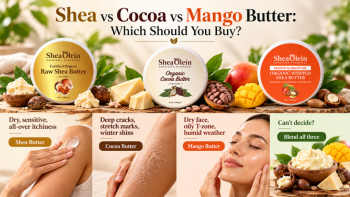
If you want the decision made for you, it comes down to this:
-
Dry, sensitive, all-over itchiness - shea butter
-
Deep cracks, stretch marks, winter shins - cocoa butter
-
Dry face, oily T-zone, humid weather - mango butter
-
Can't decide - blend all three
Season matters more than people expect. Shea works year-round, cocoa butter earns its place in winter, and mango butter is the one you'll actually keep using through summer.
How to Make a 3-Butter Whipped Body Cream at Home?
Once you've owned all three, you stop choosing between them. A three-butter whipped cream outperforms any single butter on dry skin because each one covers the other's gap - shea softens, cocoa seals, mango keeps the texture from feeling heavy.
Here's the ratio that works:
-
Melt 4 parts shea, 2 parts mango and 1 part cocoa butter over low heat
-
Stir in 2 parts jojoba oil for slip and a longer shelf life
-
Cool until it starts to set, then whip for about five minutes
-
Add a few drops of your chosen essential oils
-
Pack into wide mouth jars and store away from heat
Swap the jojoba for sweet almond oil if you want a softer, more spreadable result. Not in the mood to make it yourself? Our ready-made body butter is already whipped and jarred.
Ready to Buy Pure Unrefined Body Butters Online?
Whether you're treating winter skin or building a product line, start with 1 lb blocks of pure, unrefined butter and go from there. Buying raw costs less per use than any finished cream, and you control exactly what goes in.
Shop shea, cocoa and mango butter now - 100% pure, unrefined, no fillers.
Prefer it pre-made? Browse our body lotion and natural soaps for everyday moisture with none of the mixing.
FAQs
1. Which butter is best for extremely dry, cracked skin?
Cocoa butter. It's the hardest and most occlusive of the three, so it holds moisture in longest on heels, elbows and shins. Warm it between your palms before applying.
2. Can I use these butters on my face?
Shea and mango butter, yes. Cocoa butter, no - it's the most likely to block pores. If you're acne-prone, start with mango butter and apply a thin layer at night.
3. Which butter is best for stretch marks?
Cocoa butter is the traditional choice and the one most used during pregnancy. Shea butter works well too, especially blended with cocoa for a softer texture.
4. Do raw butters expire?
Unrefined butters last one to two years when stored in a cool, dark place in a sealed jar. Cocoa butter lasts longest. Heat and sunlight shorten shelf life, and a sour smell means it's time to replace it.
5. Shea vs mango butter - which absorbs faster?
Mango butter. It has a lower melt point and a lighter feel, which makes it the better daily face and summer option. Shea sits on the skin slightly longer, which is useful on very dry patches.